
Weed Control
One of the most difficult aspects of growing organically is weed control. We use a variety of methods in our orchard to deal with the weed issue; all are extremely time consuming and require a ton of labor in spring when a thousand other chores also need completed. Step one – hand weeding the trees and plants.
In our home orchard, we lay ground cloth at the base of our apple tree rows in early spring. This is a multiday process as inevitably high winds pull up your initial rows. After much cussing and re-staking the grass grows and holds it in place. We will pull up the ground cloth in fall for two reasons: to extend the life of the cloth and to avoid giving moles and voles a perfect winter habitat.
For our gooseberry and currant plantings, we lay cardboard (feels like playing Tetris) then put a layer of straw over the cardboard. This provides a great mulch layer. The one problem I discovered with this method this year is Idunn’s chickens were tossing straw and cardboard around the rows as quickly as we could lay it! Throughout the years, the ducks and geese would poke around the straw, but leave our work in tact. The chickens have a different outlook on life, and while I know they are doing a great job controlling the pests, I still have to growl at their antics.
At our new u-pick orchard, we will use a cultivation method and plant a cover crop during the growing season.
-
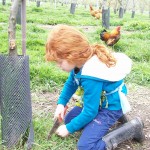
- Weeding, step 1
-
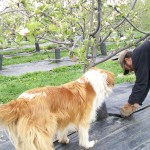
- Laying ground cloth
-
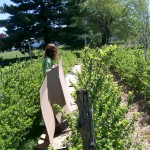
- Gooseberries
-
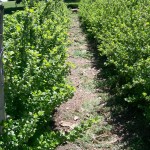
- Gooseberries, before
-
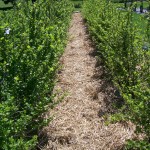
- Gooseberries, after
-
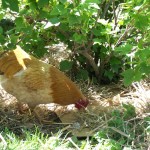
- Jack
-
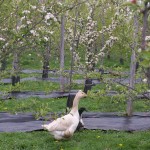
- The real weed control
